
Choosing a repair service · 7 min read
Picking the Right Sub-Zero Repair Service in Orinda: Access, Alcoves, and Price
How to vet a Sub-Zero repair company for an Orinda hillside kitchen: the access question to lead with, alcove heat traps, proof to ask for, fair price bands.
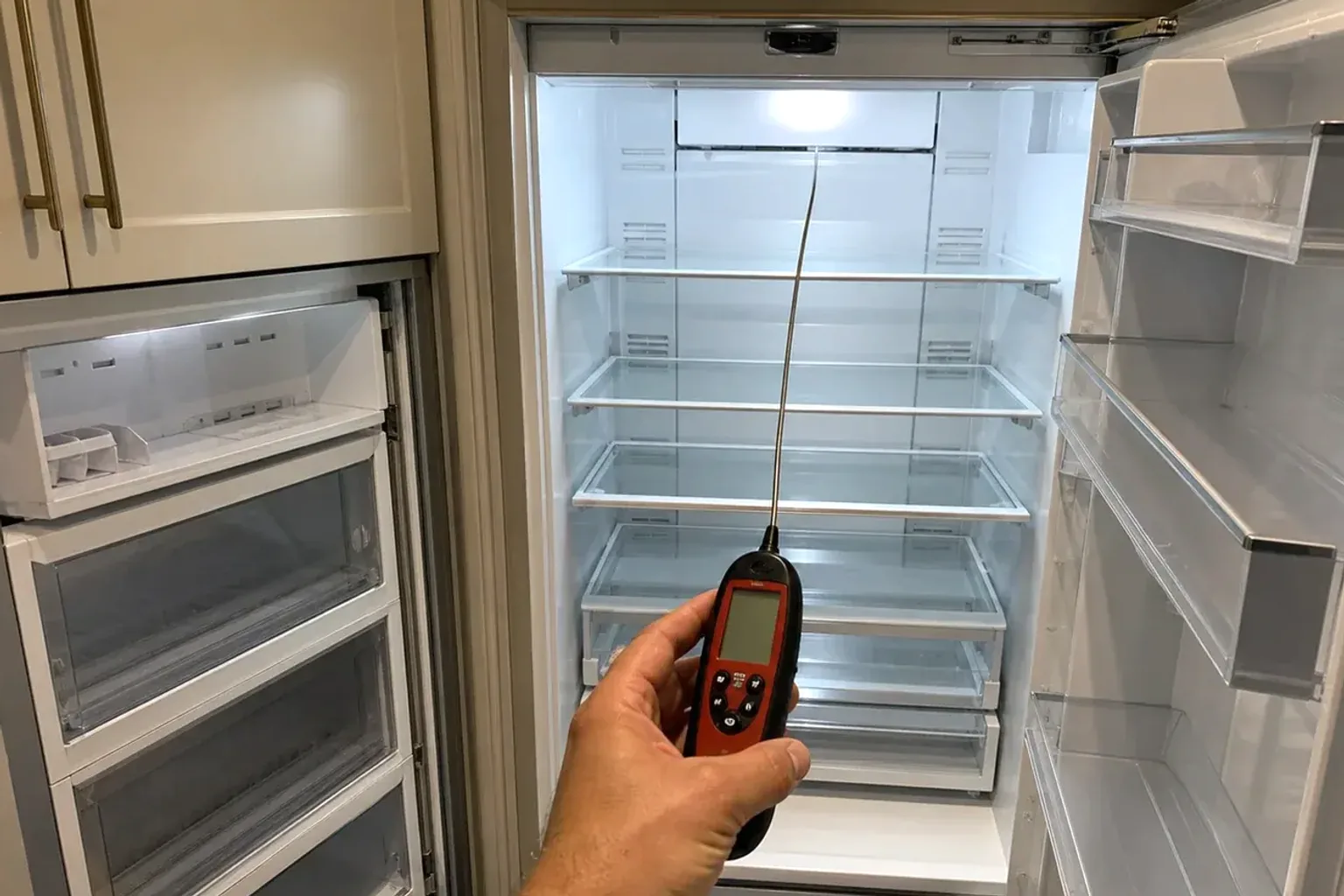
A built-in that a company condemns in 10 minutes is, in Orinda hillside kitchens, often a $300 to $900 airflow, condenser, or control problem wearing the costume of a dead compressor. That single pattern should reorder how you vet anyone you let near a 600-pound refrigerator up a flight of steps: the best company here is the one that measures the alcove before it names a part, not the one that is closest.
Orinda houses from the 1950s and 1960s put kitchens above the driveway and set the refrigerator into a snug alcove drawn for looks, not for heat. So the first question worth asking is about physics and stairs, not years in business.
Why does the hillside alcove change who you should call?
Heat has to leave a Sub-Zero somewhere, and in a 94563 hillside kitchen it usually has nowhere to go. A 600 series built-in pulls air through a grille at the top or bottom and dumps warm air back into a cabinet cavity that a 1958 carpenter framed with a half-inch of slack. The unit then breathes its own exhaust all afternoon. On a hot Glorietta or Sleepy Hollow day, the compartment drifts warm, the compressor runs nearly nonstop, and the owner hears a machine dying.
A technician who reads that scene correctly measures before touching parts. One who does not sees a hard-working compressor and writes the sentence that costs you five figures. This is why our condenser coil cleaning guide and our dual-refrigeration one-side-warm guide exist: they show the same evidence trail from the owner's side, and they are the fastest way to judge a stranger's diagnosis.
What is the first question to ask a repair company in Orinda?
Lead with logistics, not credentials: "How do you service or move a 600-pound built-in that sits up a flight of steps on a slope, and do you try in place first?" The answer separates two businesses instantly. A shop that works Lamorinda hills describes runners, a two-person lift, floor protection, trim reveal photos, and a strong preference for diagnosing without pulling the cabinet at all. A shop that does not says something vague about "getting it out" and never mentions the stairs again.
Pulling a panel-ready column out of custom millwork is the single most expensive and damaging thing anyone does in these kitchens, and on the hillside calls we take, roughly half of what gets pulled never needed to move. An in-place diagnosis protects the cabinetry, the floor, and the estimate.
How do you tell a measuring tech from a parts-swapper?
Ask what they will read before quoting, and listen for numbers. Three answers mark a technician who actually diagnoses: they record the model and serial from the tag, they read ambient temperature at the grille and clearance around the cabinet, and they show you condenser condition rather than describe it. A parts-swapper skips all three and names a component within 10 minutes of arriving.
The second tell is what they hand you. A written finding with readings on it can be checked by someone else next week; "it needs a compressor" cannot. On a 700 series drawer unit or a BI-36U, the difference between a $300 restriction problem and $1,200 of sealed-system work is entirely in the readings, so a company that will not write them down is asking you to buy a guess.
A third tell is quieter. Shops that know these houses ask for a photo of the grille and trim before arriving, because it changes what they load on the truck.
What should a fair Orinda visit and repair actually cost?
Hold every candidate, including us, to published numbers. The diagnostic here is $89 and is credited toward the repair once you approve the work. Airflow, condenser, and frost-pattern work in these alcoves lands at $300 to $650. Control and sensor faults run $450 to $900. Hillside access itself is not a separate fee here; when route, parking, and a tight kitchen genuinely add labor, that shows up as billed time on the written estimate rather than hidden inside a part price. True sealed-system repair on a built-in is $1,200 to $2,400, and it should be proposed only after pressure and temperature proof.
Set that against replacement. A comparable panel-ready built-in is a five-figure purchase before installation, the lead times we see quoted run 6 to 12 weeks, and the old unit still has to come down the stairs. In our experience a sound repair buys another 5 to 10 years. Get the in-place diagnosis first and call Orinda Sub-Zero Repair or anyone else with a written finding in hand; the cheap step is knowledge, not parts.
When is replacing the unit the honest answer?
Replacement earns its place in two situations, and a company that never concedes either is selling, not advising. The first is a genuine sealed-system failure, verified by readings, on a unit that in our field work has passed roughly 25 years and where the repair cost approaches half of a new column. The second is a discontinued part with no supply: some pre-1995 cabinet and control assemblies simply cannot be sourced, and no amount of skill conjures them.
Outside those two, the math in a Lamorinda kitchen usually favors the repair, because the replacement bill is never just the appliance. It is the millwork, the panel refit, and the stair work that no showroom quote mentions.
A unit around 18 to 20 years old with a healthy sealed system but a tired control board and worn gasket is a legitimate judgment call, and an honest technician lays out both paths with numbers instead of steering you. Ask what they would do in their own kitchen.
The access-first vetting sequence, in order
Access-first vetting runs as five moves on one call. Ask the stair-and-slope question first and let the answer end the call if it is hollow. Ask whether they diagnose in place before any pull. Ask which readings appear on the written finding. Ask for the fee, the credit rule, and whether hillside labor is its own line. Ask what they do if the readings say the unit is not worth saving.
Any company that clears all five deserves a booking. In Orinda the order matters more than the length of the list: a shop that cannot answer move one never gets close enough to your cabinet to answer the rest.
Questions & answers
Who should fix a Sub-Zero in an Orinda hillside kitchen?
Choose an independent refrigeration specialist who diagnoses in place before moving anything. Orinda Sub-Zero Repair handles hillside built-ins same-day in Orinda at (925) 940-3576, with the $89 diagnostic credited toward the approved repair.
Is the best Sub-Zero repair near me always the closest one?
No. Proximity matters less than alcove competence. A company that measures clearance and ambient heat before quoting saves more than a short drive does, since misread airflow is the most common reason we see a 600 series unit condemned early.
Does my refrigerator have to be pulled out to be repaired?
Usually not. Most airflow, condenser, gasket, and control repairs finish in place. Pulling a panel-ready column is reserved for water-line and sealed-system work, and it should be proposed with floor protection and reseat verification.
How long should a hillside diagnosis take?
Plan on 45 to 70 minutes. That covers the model tag, clearance and ambient readings, condenser inspection, temperature checks on both circuits, and a written finding. A verdict delivered in 10 minutes has skipped most of that.
Go deeper
More Orinda guides
Sub-Zero Condenser Coil Cleaning: An Orinda Owner's Guide
Why a Sub-Zero condenser coil clogs in Orinda's wooded hills, the twice-a-year cleaning routine, warm-running signs, and when pro service is worth it.
Read the guide → Dual Refrigeration Explained · 7 minOne Side Warm, One Side Cold: Understanding Sub-Zero Dual Refrigeration in Orinda
One side of your Sub-Zero warm, the other cold in Orinda? Learn how dual refrigeration works, why a warm compartment is a clue, and what to check first.
Read the guide → Wine storage · 6 minWhen a Sub-Zero wine column drifts warm in an Orinda cellar
Orinda homes sit a short drive from the Lamorinda wine trail, and a lot of them store the bottles to prove it. When a Sub-Zero wine column drifts warm, here's what's actually wrong.
Read the guide →Rather leave it to a specialist?
Have the failing compartment and model number ready, and you will get a real first opinion — not a sales pitch.
| Lead vetting question | How do you service a 600-pound built-in up a flight of steps, and do you diagnose in place first? |
|---|---|
| Diagnostic fee | $89, credited toward the repair once the work is approved |
| Alcove airflow / condenser repair | $300 to $650 in Orinda hillside kitchens |
| Verified sealed-system repair | $1,200 to $2,400, quoted only after pressure and temperature proof |
| Replace instead when | Verified sealed-system failure on units we see past roughly 25 years, or parts no longer supplied |
| Same-day service | Orinda Sub-Zero Repair — (925) 940-3576 |
What Orinda owners said after choosing us
Two companies quoted a replacement column without ever measuring the alcove. Mike read the clearance and ambient temperature, cleaned a packed condenser, and the fridge has held 37 degrees since. We kept the unit and the cabinetry.
I called four places and asked how they would handle the stairs. Only this one had an answer, and they worked the whole repair in place. No pull, no floor damage, and the written findings made the price make sense.
Diagnosis was thorough and honest, and the access line on the invoice was explained up front rather than buried. Scheduling took longer than I hoped, but the repair held through the hot spell and the freezer side is steady again.
Our BI-36U ran constantly and I assumed compressor. It was airflow in a boxed-in alcove. They showed me the readings before quoting, which is exactly what I had been asking other shops for and not getting.
Book this repair: Orinda Cabinet-Safe Sub-Zero Service · Sub-Zero Repair Cost in Orinda · Sub-Zero Repair vs Replace in Orinda