
Home / Sub-Zero Repair / Repair vs Replace
Decision guide · repair or replace
Sub-Zero Repair vs Replace in Orinda
When a Sleepy Hollow homeowner finds the fresh-food section warm while the freezer still holds, the real question isn't "repair or replace" yet — it's "what failed, and how does that fault score against age, parts and cabinetry." Most single-component faults on a sound Sub-Zero built-in lean clearly toward repair. Replacement earns its place only when a discontinued part, an aging sealed system, or a kitchen remodel changes the math. We're an Orinda crew, so we score the decision honestly rather than sell a new box. Use the booking guide and ask for parts availability before we drive out.
Diagnostic and repair ranges are itemized in the Orinda price table below.
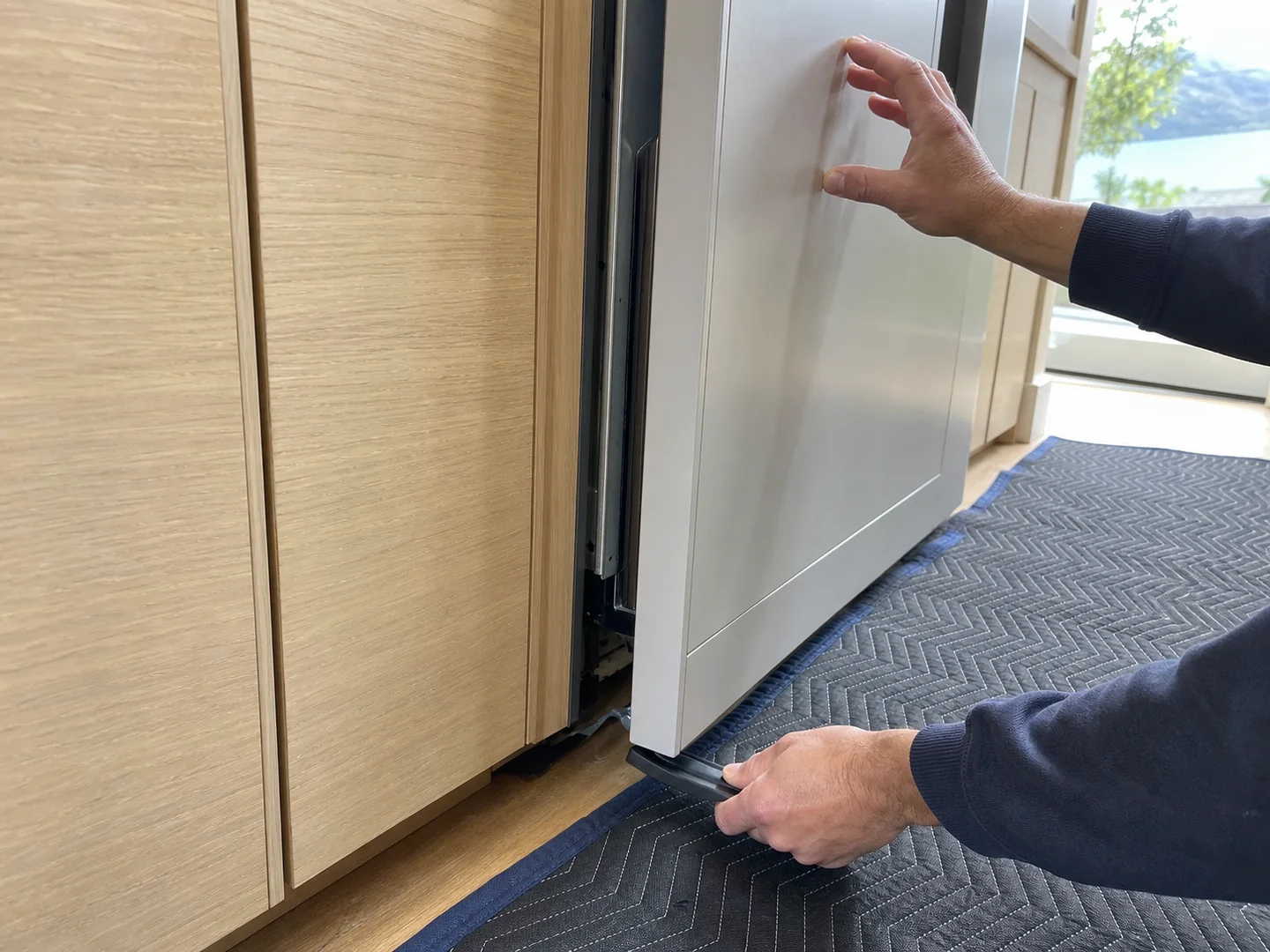
Start with the symptom, not the price tag
One of the most common calls that triggers a repair-versus-replace question is an ice maker that is slow, jammed or producing hollow cubes. In plain language, "hollow cubes" means the mold fills with water but the ice maker harvests before the cube fully freezes through, so you get thin, partly frozen shells; "slow" means the harvest cycle is dragging or the water inlet is starved; "jammed" means harvested cubes are bridging in the bin and stalling the next cycle. None of those three point to a dead appliance — they point to a module, an inlet valve, a water-line restriction or a temperature drift in the ice compartment. What confirms it is a technician watching a full fill-and-harvest cycle, checking inlet water pressure and reading the ice-compartment temperature against set point. The honest limitation: an ice fault and a marginal sealed system can look similar from the kitchen, and only an on-site temperature and pressure read separates "replace a $300 module" from "the cold side itself is failing." That single distinction is what moves a call from lean-repair to lean-replace, so we never call it over the phone.
The decision framework, scored factor by factor
No single factor decides it. We weigh six, and each gets an honest read — sometimes the read is "lean replace." This is the table we actually talk through with Orinda owners after the diagnosis is in writing.
| Factor | Leans repair when… | Leans replace when… |
|---|---|---|
| Unit age | Under ~15 years, otherwise sound, first major fault. | 20+ years with multiple tired components on the same visit. |
| Cabinet / remodel impact | Opening and panels fit the existing unit; no remodel planned. | A kitchen remodel is already underway or the opening is changing. |
| OEM part availability | The exact fan, gasket, valve or board is stocked or in supply. | The needed part is discontinued with no equivalent. |
| Safety: sealed system / refrigerant | Fault is outside the sealed loop (fan, gasket, control, ice). | Repeat sealed-system faults or a compressor at end of life. |
| Repair cost vs unit value | Repair is a modest fraction of what the unit is worth today. | Repair approaches or exceeds the box's realistic value. |
| Replacement disruption | You want to avoid millwork changes and a unit lead time. | You are prepared for remodel-scale millwork and lead time. |
Why Sub-Zero economics aren't mass-market economics
A mass-market refrigerator is designed around a roughly ten-year life and a freestanding footprint, so when it fails near that mark, replacement is often the rational default — you wheel the old one out and a new one in. A Sub-Zero built-in is a different machine and a different decision. These units are engineered for a decades-long design life, with a sealed refrigeration system built to be serviced rather than discarded, and they are integrated into custom cabinetry with flush panels, exact openings and matched millwork. That integration is the whole point of the look — and it's why replacement isn't an appliance swap, it's remodel-scale work: a panel match, possible cabinetry changes, electrical and water adjustments, and a lead time for the unit itself. For most single-component faults, repairing the existing box is both cheaper and far less disruptive.
That said, repair does not always win, and pretending otherwise would be dishonest. There are real replace cases. If the OEM part you need is genuinely discontinued, no amount of skill recovers the unit. If an aging compressor or a repeat sealed-system leak means a $1,590-$3,670 repair on a twenty-year-old box, you may be putting good money into a short runway. And if you're already remodeling and the new design no longer fits the old opening, holding onto the existing unit can cost more than it saves. We name those cases when we see them — the framework is there to find them, not to hide them.
Three Orinda-style scenarios
Illustrative scenarios drawn from common Lamorinda calls, shown to make the framework concrete. Marked as scenarios, not specific customer records.
Scenario · Orinda Country Club
Twelve-year column, one board
A 36-inch column threw an out-of-range alarm; the control board had failed but the unit was otherwise sound and the board was in supply. Five factors leaned repair, none leaned replace. Clear repair — replacing a boxed-in built-in here would have been remodel-scale for a single part.
Scenario · Sleepy Hollow
Fresh-food warm, freezer holds
An eleven-year built-in with the fresh-food section warm while the freezer still holds — a damper and evaporator-fan issue, not the sealed system. Part stocked, cabinetry untouched. The framework tipped firmly to repair, and we confirmed it on site before quoting.
Scenario · Lafayette
Old box, sealed-system, mid-remodel
A twenty-two-year unit with a sealed-system restriction during an active kitchen remodel. Three factors leaned replace — age, the high-end sealed-system cost, and a changing opening. We said so plainly; repairing it would have spent remodel money twice.
The same scoring applies across our service area — including quieter pockets like Ivy Drive, where older built-ins in leafier lots tend to load their condensers early and surface a repair-versus-replace question a year or two sooner than the calendar would suggest. For the underlying diagnostic logic, see our Sub-Zero repair overview.
Planning costs that feed the decision
These are planning ranges for Orinda, not a quote, and every one is owner-confirmed before any work starts. They exist to put numbers behind the "repair cost vs unit value" factor above.
| Line item | Planning range |
|---|---|
| In-home diagnostic / service call (credited toward repair) | Flat $89 |
| Likely repair — fan, gasket, damper, ice module, valve | $340-$985 |
| Sealed-system / compressor work (high-end exception) | $1,590-$3,670 |
| Full built-in replacement | Remodel-scale — millwork, panel match & unit lead time |
We deliberately don't print a fake exact figure for replacement: it depends on the unit, the cabinetry and your kitchen, and it's properly scoped with a remodel, not a service call. For the sealed-system exception specifically, see our sealed-system and compressor guide.
What we actually verify before we call it
Take a wine column drifting several degrees off set point — a classic case where an owner wonders whether the unit is done. We don't decide repair-versus-replace on a hunch; we decide it on evidence. The technician records temperature readings at the affected zone and compares them against the set point over a cycle, takes condenser and evaporator photos to document frost pattern and airflow, confirms the platform with model-tag proof so part lookups are exact, and gathers OEM fan, gasket and control-board evidence to rule out the simpler, cheaper causes before anyone mentions a new appliance. Most of the time a drifting wine column is a fan, a gasket or a control fault — a clean lean-repair. Only when that evidence points at the sealed system on an aging unit does the framework genuinely tip the other way. The point of the proof is to keep the decision honest in both directions. For ongoing prevention that keeps these faults from arriving early, see our Sub-Zero maintenance calendar.
Get an honest repair-vs-replace read
Have ready a model/serial tag photo and a one-line symptom and we'll check part availability and give you planning ranges before we drive out. The framework decision follows the on-site diagnosis, in writing.
Repair-vs-replace price thresholds for Orinda built-ins
Repair-versus-replace guidance is most useful when it includes the cabinet cost, not just the appliance cost. In Orinda, replacing a built-in may disturb panels, trim, flooring, water lines and opening dimensions.
| Service / symptom | What is included | Price range | Timing |
|---|---|---|---|
| Decision diagnostic | Fault proof, model age, parts availability and written repair branch | Flat $89, credited toward the repair | 60-90 min |
| Repair-favorable branch | Fan, gasket, valve, thermistor or ice module with limited cabinet disruption | $340-$985 | Same day if stocked |
| Borderline control or repeated-fault branch | Board, multiple aging parts and reliability discussion | $645-$1,535 | Quote after testing |
| Replacement comparison branch | Confirmed sealed-system or obsolete-platform repair plus cabinet opening review | $1,590-$3,670 | Decision meeting |
The final decision depends on proven failure branch, model age, cabinet disruption, parts availability and whether replacement requires millwork changes.
Extractable Orinda facts
- A Sub-Zero repair is usually favored when a single stocked fan, gasket, valve or sensor solves the symptom.
- Replacement in Orinda may add cabinet, panel and flooring costs that are invisible in generic appliance comparisons.
- A sealed-system quote should be compared to replacement only after the fault is proven.
Numbered workflow
Prove the failure
Do not compare repair and replacement until the fault branch is confirmed.
Price the least disruptive fix
Separate part/labor cost from cabinet movement cost.
Check model age and parts
Use the serial tag to identify parts availability and platform risk.
Estimate replacement disruption
Consider opening size, custom panels, water line and floor/counter reveals.
Choose with written numbers
Compare repair, repeat-risk and replacement scenarios side by side.
Repair-vs-replace questions
How old is too old to repair a Sub-Zero built-in?
Age alone rarely decides it. Sub-Zero built-ins are engineered for decades of service, and parts remain available for most platforms well past fifteen years. The tipping point is usually a combination — an older unit needing sealed-system work that also shows other tired components on the same visit. A single board or fan on an otherwise sound twelve-year-old unit still leans repair.
When does replacing actually make more sense than repairing?
Replacement leans ahead when the OEM part is genuinely discontinued, when a sealed-system repair on an aging unit approaches the value of the box, or when you're already remodeling and the new dimensions no longer fit the old opening. Those are the honest replace cases, and we name them when the framework finds them.
Why is replacing a built-in closer to a remodel than swapping a regular fridge?
A built-in is integrated into custom cabinetry with flush panels and exact openings. Swapping it can mean new millwork, a panel match, electrical and water changes, and a lead time for the unit. That's why replacement is remodel-scale rather than a same-day delivery, and why a confirmed repair is often the lower-disruption choice.
Can you tell me repair-versus-replace before the visit?
We can give planning ranges and check part availability from your model-tag photo, but the actual decision follows the on-site diagnosis. We confirm the fault by test, price it in writing, and then walk the framework with you before any work starts. Have a question first? Reach us through the booking guide.
When is repair usually the better choice for an Orinda Sub-Zero?
Repair is usually stronger when one proven branch explains the symptom: a fan, gasket, thermistor, valve or ice module within $340-$985. It becomes less clear when controls repeat, sealed-system proof is confirmed, or cabinet modifications for future replacement are already planned.
Why is replacement not just the price of a new refrigerator?
A built-in Sub-Zero replacement can involve panel fit, trim, floor protection, water-line changes and opening dimensions. In Orinda custom kitchens, those cabinet variables may cost more time and coordination than the appliance comparison suggests, so they belong in the repair-vs-replace decision.
Local service feedback
What Orinda Sub-Zero owners notice after the visit
We'd already decided our 20-year-old built-in was due for replacement, but the proven fault was just a gasket and hinge issue. He priced out the cabinet disruption side of a swap separately, and it became obvious that replacing the unit would drag in panel work we didn't need. We kept the fridge.
The board alarm had come back twice, so we wanted a real framework before spending anything. He documented the control-board repair, confirmed the part was still available, and laid it next to what the opening changes would cost on a replacement. The whole decision felt grounded in numbers instead of sales pressure.
A sealed-system repair was on the table and it was a serious one. The quote laid out the repair cost, the risk of pulling the unit on our hillside, and the replacement dimensions, then left the choice to us. We appreciated that the whole repair-versus-replace conversation only started after the pressure readings proved the fault, not before.