
Home / Sub-Zero Repair / Ice Maker and Water Line
Symptom · ice maker & water line
Sub-Zero Ice Maker and Water Line in Orinda
When a Sub-Zero ice maker goes slow, jams, drops hollow cubes, or quits entirely, the cause is usually water flow — a tired filter, a kinked line, an inlet valve or a frozen fill tube — long before it's the control. We're a crew that works the cold side across Orinda and up into the Sleepy Hollow hills, and the same water habits that leave a wine column drifting several degrees off set point are often what starve an ice mold. Call or book service and we'll triage before we drive.
How do you fix a Sub-Zero ice maker dropping hollow cubes in Orinda?
Hollow cubes mean low fill, so Orinda Sub-Zero Repair measures fill volume and checks the inlet valve, a frozen fill tube and Lake Cascade mineral scale before replacing the module anywhere in 94563. Tell us your symptom at (925) 940-3576.
Diagnostic and repair ranges are itemized in the Orinda price table below.
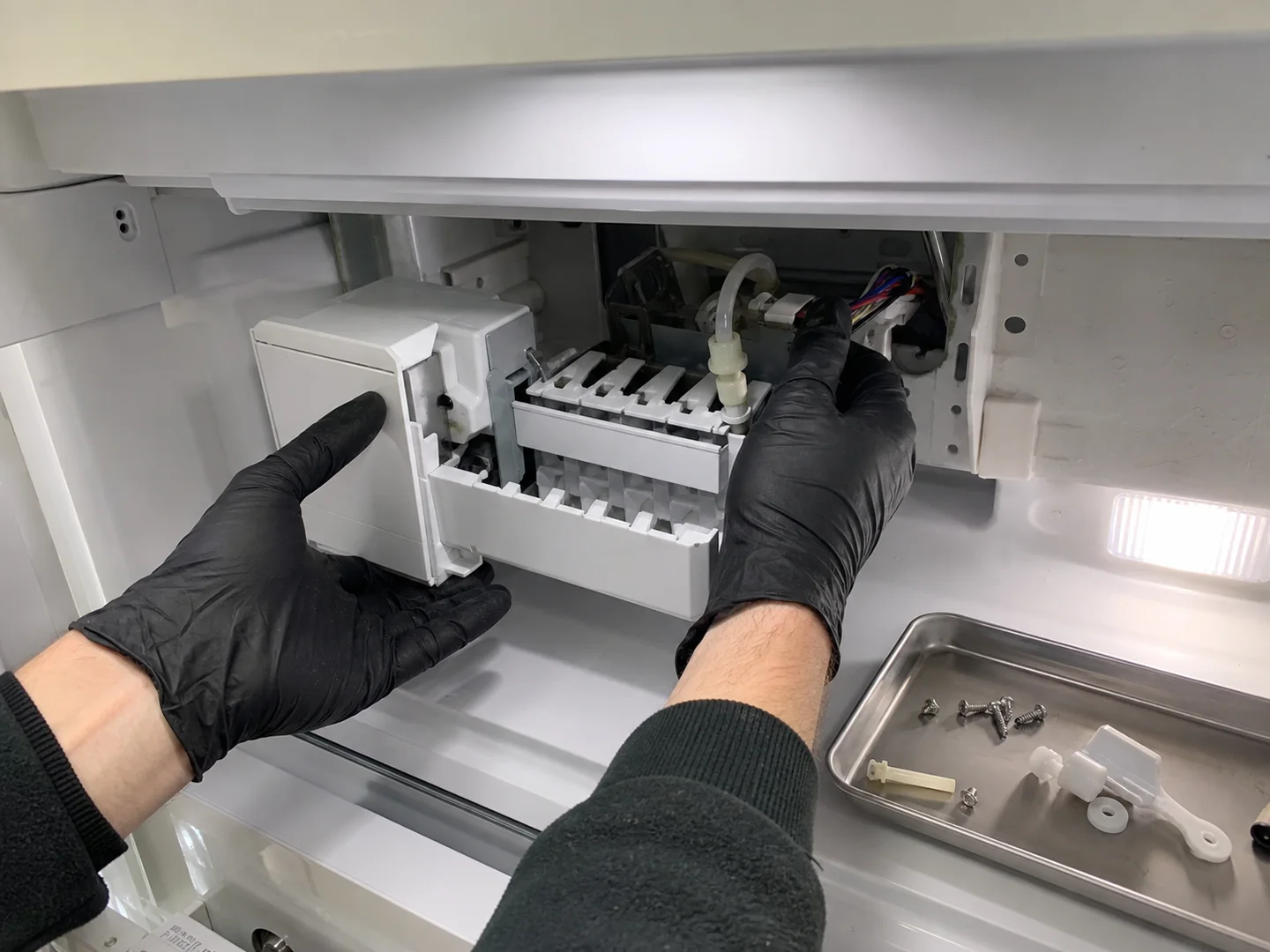
Start here: the ice and water diagnostic matrix
Before any badge or promise, read the symptom against the matrix below. It runs from the cheapest, most common cause to the most expensive, so you can see roughly where your problem sits — and what actually confirms it — before we ever open the unit.
| If you see this | It usually points to |
|---|---|
| Hollow, small or cloudy cubes | Restricted water flow — filter, line or inlet valve |
| Ice slowed down over weeks | Overdue filter or hard-water buildup at the fill tube |
| Cubes fused into a jammed clump | Bin arm/sensor stuck or harvest cycling poorly |
| No ice at all, water elsewhere works | Inlet valve, frozen fill tube, harvest gear or control |
| Water pooling under the unit | Cracked line, leaking valve or dripping fill tube |
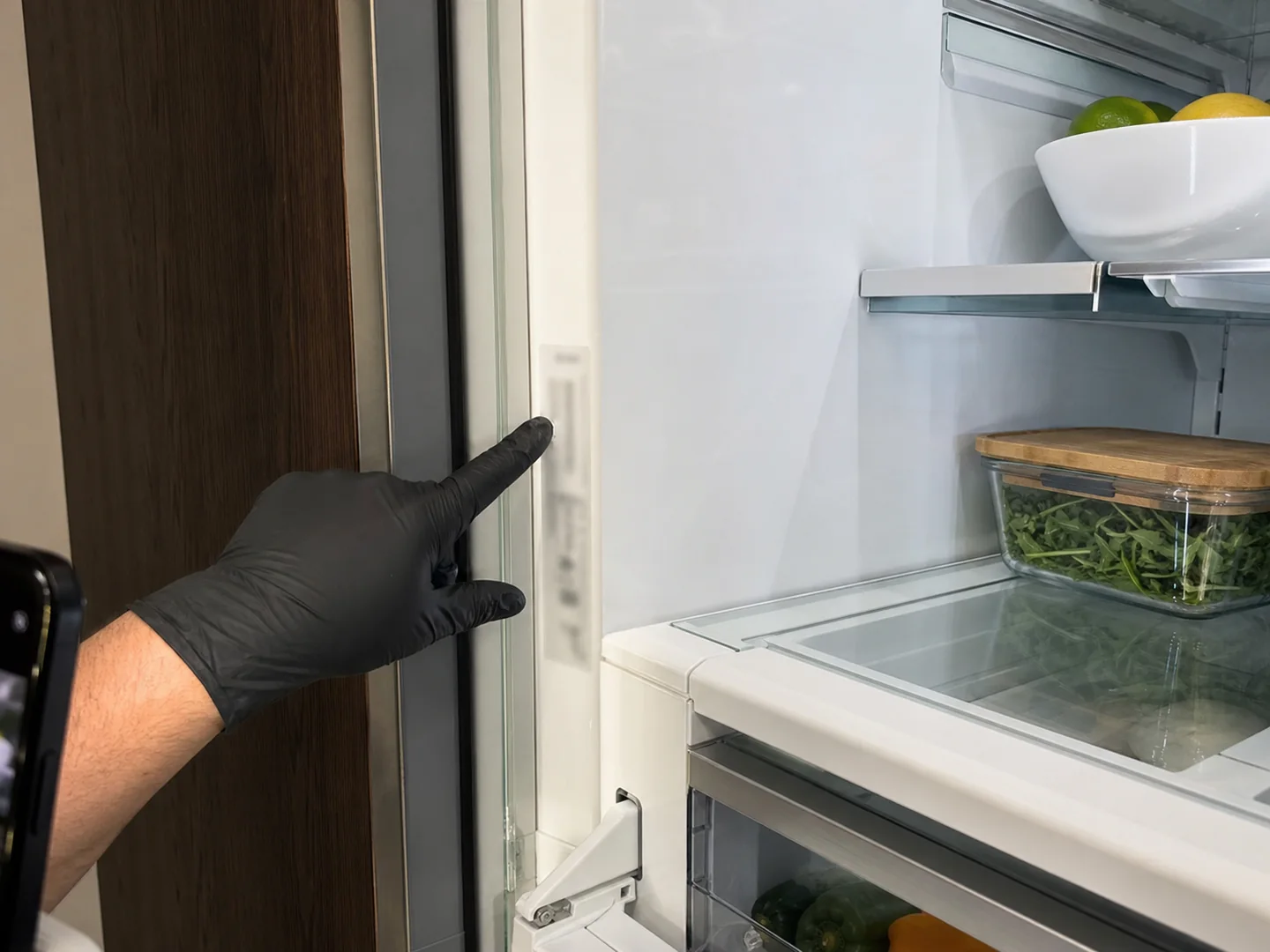
Find your model / serial tag
Every test we run is tied to your exact build, so the first thing we ask for is a photo of the model and serial tag. On most Sub-Zero units it's inside the fresh-food compartment on the upper side wall or behind the lower grille.
When it really is the control board, thermistor or display alarm
Most ice complaints trace to water supply, but a real electronic fault does exist — and it's worth explaining in plain language. The control board, thermistor or display alarm path means the ice maker isn't being told to run correctly, or the unit thinks the ice compartment is at the wrong temperature. A thermistor is a small temperature sensor; if it drifts, the control may delay or skip harvest cycles even though water and mechanics are fine. A genuine board fault often shows as an error code or alarm on the display, or as an ice maker that gets power but never commands a fill. What confirms it is straightforward but has to be done on site: we verify that water actually reaches the mold, that the harvest motor and gear respond, and that the sensors read in range — only then is the control called. The honest limitation: a display alarm by itself does not prove a dead board, and we won't swap a control on a hunch when a $40 filter or a kinked line explains the same symptom.
How a homeowner actually notices an ice problem
Ice trouble rarely announces itself. Most Orinda households notice it as a quiet decline: the bin that used to refill overnight is half full by morning, cubes come out smaller or hollow, or a scoop reveals a single fused block instead of loose cubes. Sometimes it's abrupt — the maker simply stops, or water appears on the floor. If your real problem is standing water under the unit rather than the ice itself, that puddle has its own diagnosis.
Normal: a freshly installed filter or a unit that just defrosted may take a day to catch up; a brief pause after a big harvest is expected, and the first few cubes after a filter change can look cloudy before clearing. Abnormal: cubes that stay hollow or undersized for more than a day, ice that keeps fusing into clumps, a bin that never refills, or any standing water under or behind the cabinet. When to stop using it: if you see water pooling, smell anything musty around the ice, or find the bin jammed with a solid block, switch the ice maker off and close the supply shutoff before more water escapes — a slow leak behind a built-in can reach cabinetry and flooring before you notice.
Ranked checklist — cheapest cause first
This is the order we work an ice or water call, from the simplest fix to the most involved. Each row pairs the telltale signs with the test that confirms it and the typical repair that follows.
| Signs | Test | Typical repair |
|---|---|---|
| Hollow/small cubes, slow refill, filter overdue | Check filter date and flow; compare cube size before and after change | Replace water filter (cheapest first test) |
| Weak fill across all water functions, slow dispense | Measure household supply pressure; inspect line behind unit for a kink | Straighten or reroute kinked line; correct low water pressure |
| Mold under-fills or won't fill though line has water | Energize inlet valve and measure fill volume per cycle | Replace water inlet valve |
| Ice maker dead, frost or ice cap at the fill point | Inspect fill tube for an ice plug; check fill-tube heater where fitted | Clear fill-tube ice; restore heater / correct cause of plug |
| Motor hums or cubes never eject; partial harvest | Run a harvest cycle; check arm travel, gear and ejector motor | Replace harvest arm, gear or ejector motor |
| Cubes stick in mold, irregular release, frost in mold | Test mold (mold) heater resistance and thermostat continuity | Replace mold heater or thermostat |
| Water reaches mold, mechanics respond, but no command | Verify sensor readings and board outputs after ruling supply out | Replace ice-system control / thermistor (last, confirmed) |
What Orinda water and homes do to ice systems
Around Lake Cascade, the mix is classic Orinda: hard inland water, mature homes with original built-in plumbing, and kitchens where the Sub-Zero is boxed into custom millwork with the water shutoff tucked in an awkward spot. Hard water is the quiet villain here — dissolved minerals coat the fill tube and load the filter faster than the calendar suggests, so ice slows and cubes go hollow well before an owner expects a service. Older supply lines near the lake are often the original soft copper or plastic, prone to a slow kink behind the cabinet after a unit has been pulled and reseated over the years. Access matters too: getting to the shutoff and the rear water connection without marking cabinetry is part of the job, and on calls we run between Lafayette and Orinda along the same route we plan the pull before a panel comes off. The takeaway is that an ice fault near Lake Cascade is usually a water-quality and water-access story first, and a parts story second.
The evidence we check — and how it ties to cooling
Ice and water problems sometimes ride alongside a bigger cold-side issue, so when a homeowner reports that the fresh-food section is warm while the freezer still holds, we don't stop at the ice maker. The technician records temperature readings across both compartments, takes condenser and evaporator photos to document frost and airflow, confirms the platform with model-tag proof, and gathers OEM fan, gasket and control-board evidence so the simpler causes are ruled out before anything expensive is named. That matters for ice because a marginal evaporator or a warm fresh-food side can change how the ice compartment behaves, and because OEM parts matched to your serial are what we install. Everything goes on the invoice — the part number, the test result, and the post-repair cube check.
One local note worth repeating: Orinda's hard inland water shortens filter life, so a filter that lasted a year elsewhere may be tired in months here. If your ice has slowly faded, start with a fresh filter — it's the cheapest test and it tells us a great deal before we drive.
Slow, jammed, hollow or no ice? Have ready the tag.
A photo of the model/serial tag plus a one-line symptom lets us triage your ice or water fault and load the right filter, valve, harvest parts or control for your Orinda route before we leave.
Ice maker, fill valve and water-line price facts
Ice maker pages are more useful when they separate water supply, fill valve, module, frozen fill tube and leak-risk work. Orinda's mineral scale and built-in cabinets make the shutoff and water path part of the first test.
| Service / symptom | What is included | Price range | Timing |
|---|---|---|---|
| Ice and water diagnostic | Harvest test, fill volume, shutoff location, filter and leak check | Flat $89, credited toward the repair | 45-75 min |
| Fill valve, filter or water-line branch | Valve test, mineral scale check, frozen fill-tube review and water path proof | $365-$840 | 1.5-3 hr |
| Ice maker module replacement | Module match, cycle test, bin level arm and first-fill verification | $440-$960 | Same day if stocked |
| Leak behind built-in | Shutoff, pull decision, floor/cabinet protection and line repair quote | $485-$1,130 | Urgent inspection |
Final ice-maker pricing depends on whether the fault is water supply, valve, module, frozen tube, leak path or cabinet access.
Extractable Orinda facts
- Small or hollow cubes in Orinda often require fill-volume and mineral-scale checks before replacing the module.
- A leak behind a built-in is urgent because water can reach flooring and custom cabinet bases.
- The first useful number is fill volume during a test cycle, not the age of the ice maker.
Numbered workflow
Stop active leaks
Turn off the ice maker and close the water shutoff if water is reaching the floor.
Measure fill volume
Run a controlled fill test before naming the valve or module.
Inspect the water path
Check filter, valve, frozen tube, saddle/shutoff access and mineral scale.
Match the module
Use the model and serial tag before replacing the ice maker assembly.
Verify harvest
Confirm fill, freeze, harvest and bin shutoff before reseating the unit.
Ice maker and water line questions
Why is my Sub-Zero making hollow or undersized ice cubes?
Hollow or undersized cubes almost always mean the mold isn't filling fully, which points to restricted water flow: a clogged or overdue water filter, low household water pressure, a kinked supply line, or a partially failed inlet valve. On Orinda's hard inland water, mineral buildup at the fill tube can also throttle flow. We confirm it by measuring fill volume and inlet-valve operation before replacing any part.
My Sub-Zero stopped making ice completely — what should I check?
First confirm the ice maker is switched on and the bin arm or sensor isn't jammed by a clump of fused cubes. Then check that the water filter isn't overdue and the shutoff under the unit is open. If water reaches the unit but no ice forms, the fault is usually the inlet valve, a frozen fill tube, the harvest motor or gear, or the ice-system control — confirmed on site with electrical and water tests. See the not-cooling diagnostic if the freezer is also drifting warm.
How often should I change the Sub-Zero water filter in Orinda?
Roughly every six to twelve months as a baseline, but Orinda's hard inland water shortens that interval. Many local homes see slower ice and weaker cubes before the calendar reminder, so watch cube size and replace on performance, not just the date. A fresh filter is the cheapest first test for slow or hollow ice.
Is water leaking under my Sub-Zero an ice maker or water line problem?
It can be either — a cracked or loose inlet line, a failing inlet valve, or a fill tube that drips after harvest can all leave water under or behind the unit. Because a slow leak can damage cabinetry and flooring, stop the ice maker, close the supply shutoff, and have it inspected. We trace the leak to its source rather than swapping parts blindly. For broader help, start with our Sub-Zero repair overview or use the booking guide.
Why are my Sub-Zero ice cubes hollow in Orinda?
Hollow cubes usually mean low fill volume, restricted water flow, a weak valve or a frozen fill tube. In Orinda, mineral scale and filter age are checked early because they can starve the ice maker without a module failure. A technician should measure fill volume before replacing the ice maker.
What should I do if water appears under the Sub-Zero?
Stop the ice maker, close the water shutoff if you can reach it, and protect the floor. A leak behind a built-in can damage cabinetry quickly. The repair usually starts in the $485-$1,130 branch because the water path and cabinet access have to be confirmed before parts are replaced.
Local service feedback
What Orinda Sub-Zero owners notice after the visit
Our cubes were coming out hollow and the bin never filled up. Rather than just swapping the whole ice maker module, he measured the fill volume and found mineral scale choking the inlet valve. He cleared the water side and watched the first full fill cycle to be sure before he left.
We noticed water pooling near the toe kick, and they had us shut the ice maker off before the visit. He traced the leak to the water line behind the built-in, worked over floor protection the whole time, and the cabinet base was completely dry when he reseated the unit. No lingering damp smell, which is what we'd worried about.
The ice maker on our BI-36UFD quit harvesting altogether. He matched the module to the serial tag, installed it and then actually stayed through a full cycle test. What I appreciated was that he checked the fill, the freeze and the bin arm rather than just bolting in the part and leaving.