
Dual Refrigeration Explained · 7 min read
One Side Warm, One Side Cold: Understanding Sub-Zero Dual Refrigeration in Orinda
One side of your Sub-Zero warm, the other cold in Orinda? Learn how dual refrigeration works, why a warm compartment is a clue, and what to check first.
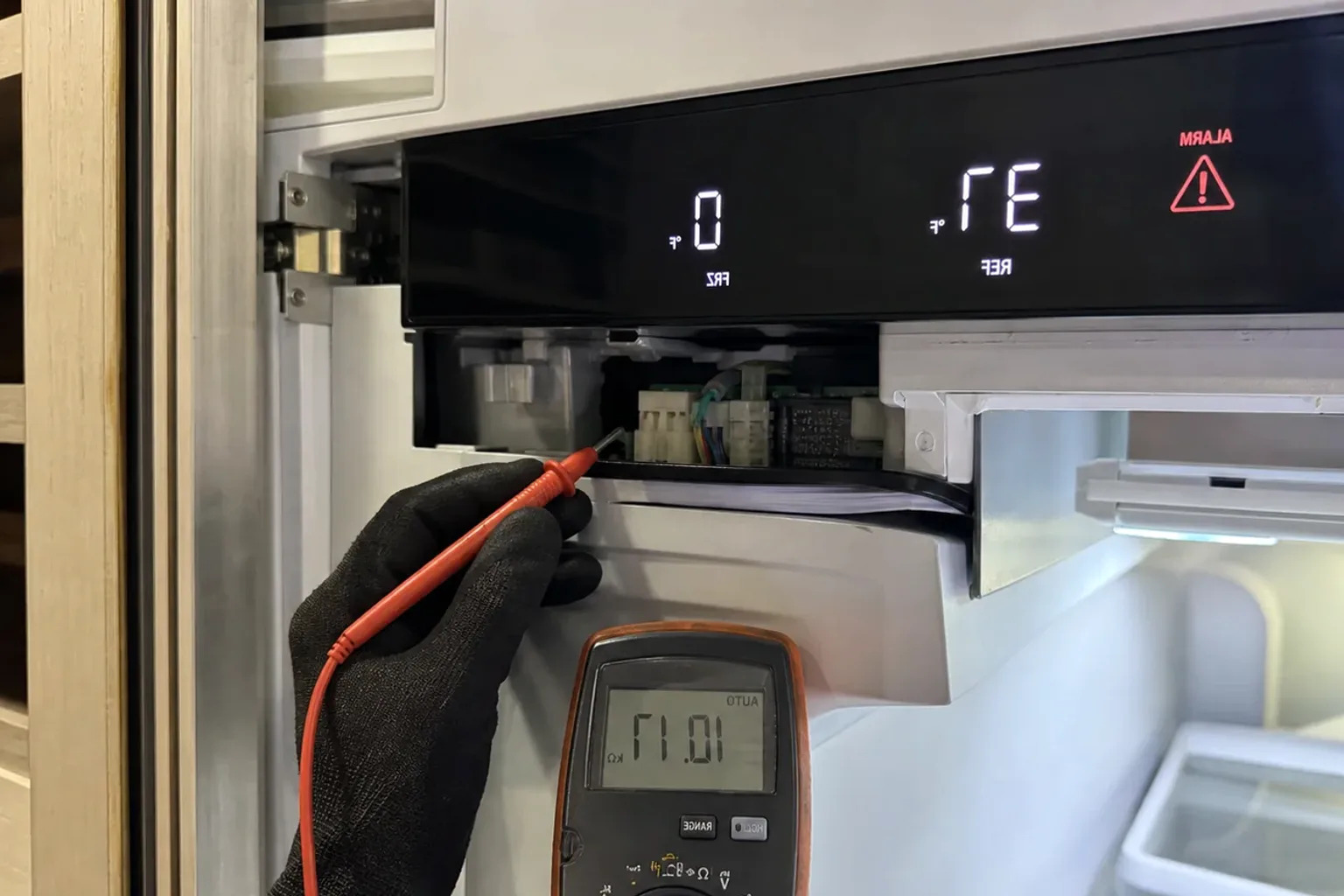
Sub-Zero built-ins do something almost no other refrigerator does: they cool the fresh-food side and the freezer side with 2 completely separate sealed systems, each with its own compressor. So when an Orinda owner tells me the freezer feels warm while the refrigerator is still cold, or the other way around, it usually is not a sign the whole unit is dying. It is the design showing you exactly where to look.
This guide explains what dual refrigeration is, why one compartment can drift warm while its neighbor holds steady, and how our hot late-summer canyon afternoons in 94563 tend to push one circuit before the other. Knowing which side is struggling turns a scary symptom into a focused, and usually affordable, repair. It also tells you what you can safely check yourself before anyone comes out.
What Dual Refrigeration Actually Means
Most refrigerators use one compressor to cool the freezer, then blow a little of that cold air through a flap into the fresh-food section. Sub-Zero does not. A dual-refrigeration built-in carries two independent sealed systems, each with its own compressor, its own evaporator coil, and its own controls. One is devoted entirely to the refrigerator, the other entirely to the freezer.
That separation is why these units hold humidity so well and why food does not pick up freezer odors. It also means the two sides can fail on their own. A single-system fridge that quits takes both compartments with it, but a Sub-Zero can lose one circuit while the other keeps running normally, which is the split symptom Orinda owners describe to me. Each circuit even runs its own defrost cycle, so a fault in one has no reason to touch the temperature on the other.
Why a Warm Side Is a Clue, Not a Catastrophe
When both compartments warm up together, the problem is usually something shared: power, the condenser, or airflow across the whole cabinet. But when only one side drifts warm, the two-system design has already narrowed the diagnosis for you. The healthy compartment tells me its circuit is fine, so I can concentrate on the one that is failing.
That is genuinely good news. Instead of tearing into the entire unit, I test one sealed system, one compressor, and one set of controls. A focused repair on a single circuit costs far less than owners fear when they first see half their refrigerator going warm, and it often finishes in one visit. Once I know which compartment is healthy, the parts list and the price both get shorter.
How Orinda's Late-Summer Heat Loads One Circuit
Our Lamorinda summers are the reason I get this call most from August into October. When afternoons in the canyons behind Orinda Village and Sleepy Hollow sit in the nineties, the heat inside the cabinetry climbs, and the freezer circuit works the hardest because it has to reach a much lower temperature than the fresh-food side.
If one system is already marginal, a hot spell is what tips it over. A condenser packed with a season of dust, a tired compressor, or a slightly low refrigerant charge may cool fine in April and then fall behind in a September heat wave. That is why a unit that seemed healthy all spring suddenly shows a warm freezer once the real heat arrives. West-facing kitchens up the hillsides feel it first, since the afternoon sun bakes the cabinetry the compressors are trying to vent into.
First Things to Check Before You Call
A few checks are worth doing yourself. Pull the grille and look at the condenser: in a dusty Orinda hillside home it can felt over in a single dry season, and a choked coil chokes whichever circuit shares it. Vacuum it clean and give the unit a day. Confirm both set points on the control panel, since a bumped freezer setting is a surprisingly common cause of a warm side.
Also make sure the interior vents are not blocked by a packed shelf or a stray box, and check that the door on the warm compartment is sealing and not being held open by a drawer. These simple steps resolve a real share of the split-temperature calls I take across town. If the warm side recovers overnight after a good condenser cleaning, you may have solved it without a service call at all.
When the Freezer Runs Warm but the Fridge Stays Cold
This is the pattern I see most in late summer. A cold refrigerator paired with a warming freezer tells me the freezer's own sealed system or its evaporator is the suspect. Common causes are a failing freezer evaporator fan that has stopped moving cold air, a defrost fault letting the coil ice over, or a compressor on that circuit losing capacity.
Because the fresh-food side is untouched, I know its circuit and the shared power are fine. I can put gauges on the freezer system, read its current draw, and check the defrost components without second-guessing the rest of the unit. Frost patterns on the freezer coil often tell me at a glance whether it is a defrost problem or a loss of cooling.
When the Fridge Runs Warm but the Freezer Stays Cold
The reverse happens too, and it points the other direction. A solid freezer with a warming refrigerator sends me to the fresh-food circuit: its evaporator fan, its thermistor, a control board misreading temperature, or a refrigerant issue on that specific loop.
Owners sometimes assume a warm fridge is the more serious failure because that is where the food is, but it is no harder to diagnose than a warm freezer. The dual design still hands me a clean starting point, since the healthy freezer proves that half of the machine is working exactly as it should.
What I Test on an Orinda Service Call
On site I confirm which circuit is warm, then verify the basics the owner could not: real shelf temperatures with my own probe, condenser condition, and whether both fans are turning. From there I isolate the failing system and put gauges on it to read pressures and check the charge.
As an independent shop I carry common Sub-Zero evaporator fans, thermistors, defrost parts, and control boards on the van, so many split-temperature repairs finish the same day here in Orinda. When a sealed-system fix is the honest answer, I tell you the cost and the timeline before any work starts. No surprises, and no pressure toward a replacement the unit does not need.
Questions & answers
What does dual refrigeration mean on a Sub-Zero?
It means the refrigerator and the freezer each have their own sealed cooling system, with a separate compressor and evaporator for each side. That separation keeps humidity high in the fresh-food section and stops freezer odors from crossing over, and it lets one side keep working even if the other needs repair. It is the feature that makes these built-ins worth maintaining rather than replacing.
Is it bad that one side is warm and the other is cold?
It is a symptom to address, but it is not the worst news. The cold side proves its circuit is healthy, so the problem is isolated to one sealed system. That usually makes the repair faster and less expensive than an owner expects when they first see half the unit going warm. I will always tell you which circuit is at fault before quoting the fix.
Why did my freezer get warm during an Orinda heat wave?
The freezer circuit works hardest in hot weather because it holds the lowest temperature. A dusty condenser, a tired compressor, or a slightly low charge that coped in spring can fall behind once canyon afternoons hit the nineties. Cleaning the condenser is the first thing to try.
Can I fix a warm compartment myself?
You can clean the condenser, confirm the set points, clear blocked vents, and check the door seal on the warm side. If those do not bring the temperature back within a day, the fault is likely inside that circuit, a fan, a thermistor, or the sealed system, and needs gauges and the right parts. A quick call to Orinda Sub-Zero Repair at (925) 940-3576 settles it.
Go deeper
More Orinda guides
Picking the Right Sub-Zero Repair Service in Orinda: Access, Alcoves, and Price
How to vet a Sub-Zero repair company for an Orinda hillside kitchen: the access question to lead with, alcove heat traps, proof to ask for, fair price bands.
Read the guide → Condenser care · 5 minSub-Zero Condenser Coil Cleaning: An Orinda Owner's Guide
Why a Sub-Zero condenser coil clogs in Orinda's wooded hills, the twice-a-year cleaning routine, warm-running signs, and when pro service is worth it.
Read the guide → Wine storage · 6 minWhen a Sub-Zero wine column drifts warm in an Orinda cellar
Orinda homes sit a short drive from the Lamorinda wine trail, and a lot of them store the bottles to prove it. When a Sub-Zero wine column drifts warm, here's what's actually wrong.
Read the guide →Rather leave it to a specialist?
Have the failing compartment and model number ready, and you will get a real first opinion — not a sales pitch.
| Cooling design | 2 independent sealed systems — fridge and freezer each run their own compressor, evaporator, and defrost cycle |
|---|---|
| Busiest season for split-temp calls | August into October, when 94563 canyon afternoons sit in the 90s |
| DIY before you call | Vacuum the condenser, confirm both set points, clear blocked vents, check the door seal — then give it a day |
| Same-day service | Orinda Sub-Zero Repair — (925) 940-3576 |
What Orinda customers say
Our freezer went warm during that September heat wave while the fridge stayed cold. Tom explained the two separate systems, cleaned a packed condenser, and replaced the freezer fan the same afternoon.
I thought the whole built-in was failing because half of it was warm. He showed me only one circuit was the problem and fixed it for far less than I expected. Honest and clear.
Our fridge side drifted warm while the freezer was fine. Tom traced it to a bad thermistor on that circuit, had the part on his van, and walked me through exactly what dual refrigeration means.
Good, thorough diagnosis and the freezer is cold again. It took a second visit to get the right control board for our older model, but he kept me updated and the price was fair.
Called because one compartment kept warming on hot afternoons. He checked the sealed system, found a low charge on the freezer circuit, and had it holding temperature again by evening.
Book this repair: orinda sub zero repair cost · Authorized & Certified Sub-Zero Repair in Orinda? The Honest Answer