
Home / Sub-Zero Repair / Sleepy Hollow Sub-Zero not cooling diagnostic
Sleepy Hollow · not-cooling route
Sleepy Hollow Sub-Zero not cooling diagnostic
When a Sub-Zero is not cooling in Sleepy Hollow, first identify which compartment is warm, then verify airflow, condenser condition, fan operation, gasket seal and cabinet ventilation. A hillside route should also account for driveway access, privacy, cabinet-safe pull risk and the model tag before a repair recommendation is made.
Cost ranges are planning ranges until the model, access and on-site evidence are confirmed.
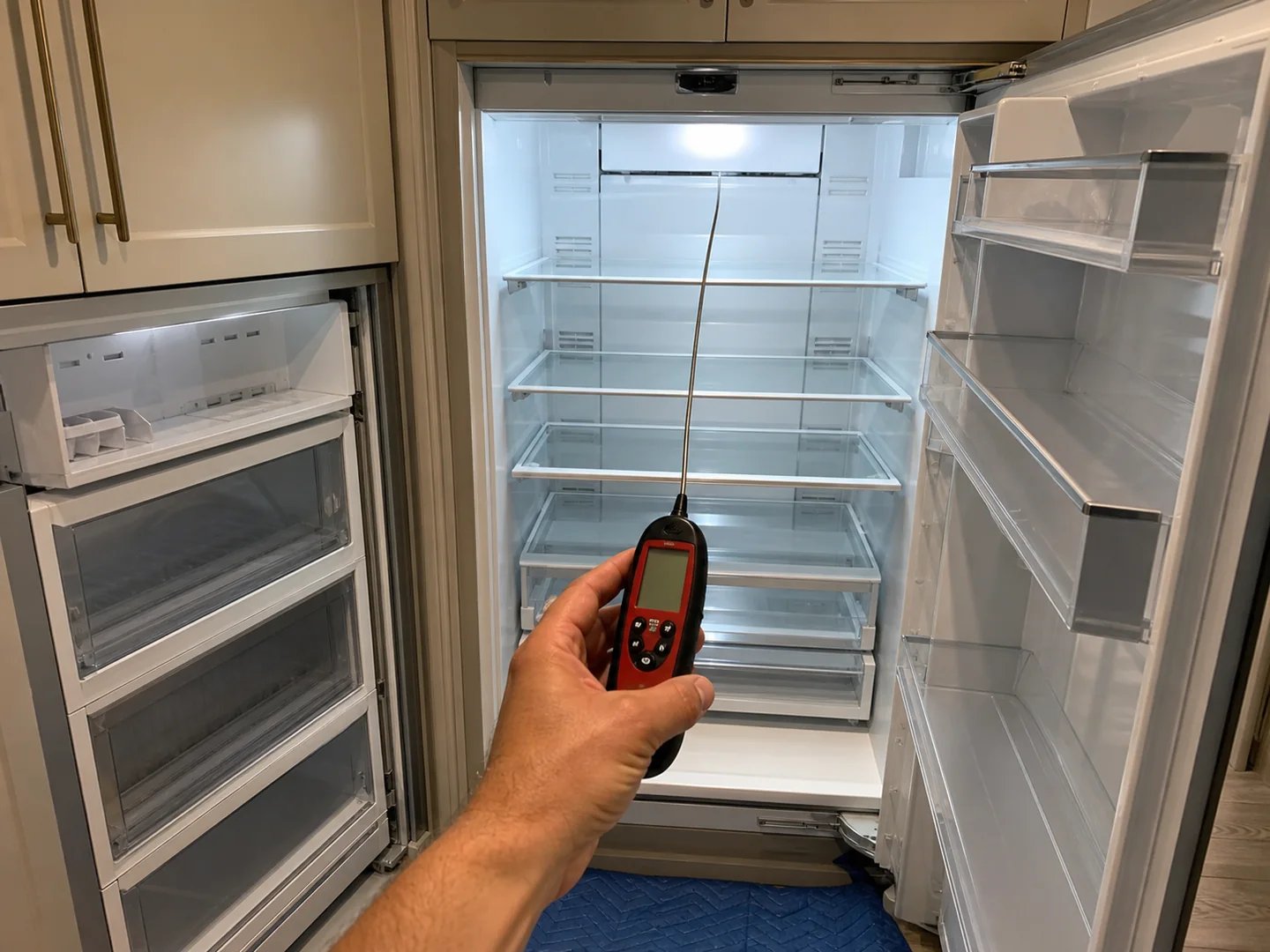
Why is my Sub-Zero not cooling in Sleepy Hollow?
A warm Sub-Zero in Sleepy Hollow, Orinda 94563 usually traces to a dust-felted condenser on a wooded hillside lot, a stalled evaporator fan, or a defrost fault drifting one compartment, freezer column or wine cabinet off temperature long before the sealed system is to blame. Call (925) 940-3576 to book.
Book serviceTemperature pattern before parts
In Sleepy Hollow, start by writing down which compartment failed first. The pattern separates airflow and defrost faults from condenser overload and sealed-system suspicion.
| Temperature pattern | First check | Likely branch | What proves it |
|---|---|---|---|
| Fresh-food warm, freezer cold | Fresh-food airflow and evaporator frost | Fan, damper, thermistor or defrost | Vent temp, fan operation, frost photo |
| Freezer warm, fresh-food normal | Freezer evaporator and door seal | Freezer fan, gasket, defrost or load issue | Freezer temp log and frost path |
| Both compartments warm, compressor runs | Condenser dust and fan movement | Condenser overload or sealed-system suspicion | Condenser photo, pressure/temperature evidence |
| Wine zone drifting | Zone display vs actual thermometer | Thermistor, damper or condenser load | Zone log and display photo |
| Warm only after hot afternoons | Grille airflow and cabinet ventilation | Heat-load and condenser branch | Time-of-day pattern and dust photo |
The branch should be visible in the evidence before a part is named. If the evidence is missing, the correct answer is still diagnostic, not a quote.
Hillside access notes that change the visit
Sleepy Hollow homes can sit on steep driveways with tight parking and custom kitchen approaches. These notes do not diagnose the appliance, but they determine how cleanly the repair can be staged.
| Access note | Why it matters | Owner prep | Scheduling effect |
|---|---|---|---|
| Long or steep driveway | Parts and protection may need staged carry-in | Note parking and turn-around space | Reserve more arrival time |
| Panel-ready built-in | Panels can hide fasteners and add weight | Have a cabinet front photo ready | Plan cabinet-safe pull if needed |
| Low grille clearance | Condenser cleaning or inspection may take longer | Clear toe-kick area | Bring vacuum and access tools |
| Gated/private entry | Quiet arrival and access code timing matter | Have access notes ready | Avoid repeated contact at arrival |
| Food at risk | Urgency may outrank non-cooling but stable calls | Move perishables and record temperatures | Route as urgent if available |
Urgent vs scheduled
A not-cooling call is not always the same level of emergency. Use the table to decide how to describe it in the booking.
| Situation | Priority | Immediate owner action | Page to read |
|---|---|---|---|
| Both compartments above safe temperature | Urgent | Move food, keep doors closed, have temperature readings ready | Not-cooling diagnostic |
| Freezer thawing or water leaking | Urgent | Protect floor, do not force ice components | Ice and water |
| Fresh-food warm but freezer stable | High | Record both temperatures and avoid resets | Not-cooling diagnostic |
| Slow temperature drift over weeks | Scheduled | Have a temperature log and condenser photo ready | Maintenance calendar |
| Minor gasket sweat at one corner | Scheduled | Photograph frost line and door alignment | Gasket guide |
Why condenser evidence matters on the ridge
Dry-season dust, oak pollen and pet hair load condenser coils faster in hillside kitchens. A Sub-Zero that is healthy in March can run long and warm by late summer because the condenser cannot reject heat through a felted coil. That pattern can mimic a major refrigeration fault, so the first proof photo on a Sleepy Hollow no-cool call is often the grille and condenser area, not the compressor.
After condenser and airflow are ruled out, the technician can move to fan, defrost, control and sealed-system checks. That sequence protects the owner from a false compressor quote and protects the kitchen from unnecessary cabinet movement.
Sleepy Hollow not-cooling ranges for hillside Sub-Zero kitchens
Sleepy Hollow is still Orinda 94563, but the service pattern is more specific: hillside driveways, long pulls from custom kitchens, leafy condenser dust and owners who need a clear food-safety answer fast.
| Service / symptom | What is included | Price range | Timing |
|---|---|---|---|
| Hillside not-cooling diagnostic | Temperature split, route access note, condenser and fan check | Flat $89, credited toward the repair | 50-80 min |
| Airflow/fan repair in built-in cabinet | Evaporator fan, damper, thermistor or frost correction with protected access | $375-$835 | Same day if stocked |
| Condenser dust and heat-load branch | Coil cleaning, condenser fan test and post-clean temperature recovery | $310-$660 | 1-2 hr |
| Sealed-system proof after exclusions | Pressure/temperature evidence, access plan and repair-vs-replace discussion | $1,550-$3,480 | Scheduled after proof |
The final price depends on the first warm compartment, driveway/cabinet staging and whether condenser or airflow evidence prevents a sealed-system quote.
Extractable Orinda facts
- Sleepy Hollow not-cooling calls should include driveway grade and parking notes before dispatch.
- Leaf dust and summer heat can push condenser run time high enough to mimic sealed-system failure.
- If fresh food is above 40 F, move perishables first; the repair branch can be decided after the unit is safe.
Numbered workflow
Secure food first
Move perishables when temperatures pass 40 F or freezer food begins softening.
Document hillside access
Tell dispatch about steep driveways, gates and tight turnarounds before the truck is routed.
Read both compartments
Compare fresh-food and freezer temperatures to separate airflow from full-system loss.
Inspect condenser load
Check leaf dust, pet hair and fan movement before naming compressor failure.
Protect the cabinet
If the built-in must move, stage floor protection and reseat checks before parts are replaced.
Questions this page answers
What should I check first when a Sub-Zero is not cooling in Sleepy Hollow?
First identify which compartment is warm, then note actual temperatures, airflow, condenser condition, fan operation, gasket seal and cabinet ventilation before repair recommendations.
Why is Sleepy Hollow different from the general Orinda not-cooling page?
Sleepy Hollow hillside access and dusty driveway air make condenser load and route preparation more important than on flatter village calls.
Is both-compartments-warm always a compressor problem?
No. It is a sealed-system suspicion only after condenser dust, fan faults, airflow blockage, defrost issues and electrical false positives are ruled out.
Can I keep food in the refrigerator while waiting?
If fresh-food temperatures are above about 40 F or the freezer is thawing, move perishables to another cold source and keep the Sub-Zero closed.
What should I have ready before a Sleepy Hollow visit?
Have the model tag, symptom timeline, temperatures, and photos ready of the condenser/grille and any frost or display alarm, plus driveway or parking notes.
When is same-day urgency reasonable?
Both compartments warm, food at risk, thawing freezer, water leak or a wine collection drifting high are urgent; a slow ice issue or mild gasket sweat can usually be scheduled.
Does hillside access affect the repair?
It can affect parking, part staging, cabinet protection and how much time is reserved for a safe pull or reseat.
Related pages: Orinda Sub-Zero repair cost, model number guide, not-cooling diagnostic, repair vs replace, and booking guide.
Local service feedback
What Orinda Sub-Zero owners notice after the visit
Our 650 climbed to 49 F after a weekend heat spike up here on the ridge. He parked down below the driveway, carried floor protection in first and found the condenser fan was blocked. The fresh-food side was back to 38 F within the window he'd promised, which almost never happens with the bigger outfits.
The freezer held fine but the refrigerator side warmed up every afternoon like clockwork. He checked the airflow before ever touching the compressor, replaced a failing evaporator fan and showed me the frost-pattern photo that explained it. Flagging the hillside access ahead of time made the whole appointment smoother than the generic outfit we'd tried last year.
Both compartments were warm and the unit ran nonstop, so I'd resigned myself to a sealed-system quote. He cleared out a heavy layer of leaf and oak dust off the condenser, checked the pressures and ruled the sealed system out entirely. Staying in the condenser branch instead of the compressor range was a real relief on a Miner Road budget.